Showing posts with label classical music. Show all posts

July 2, 2018

Independence Day: Behind the Score


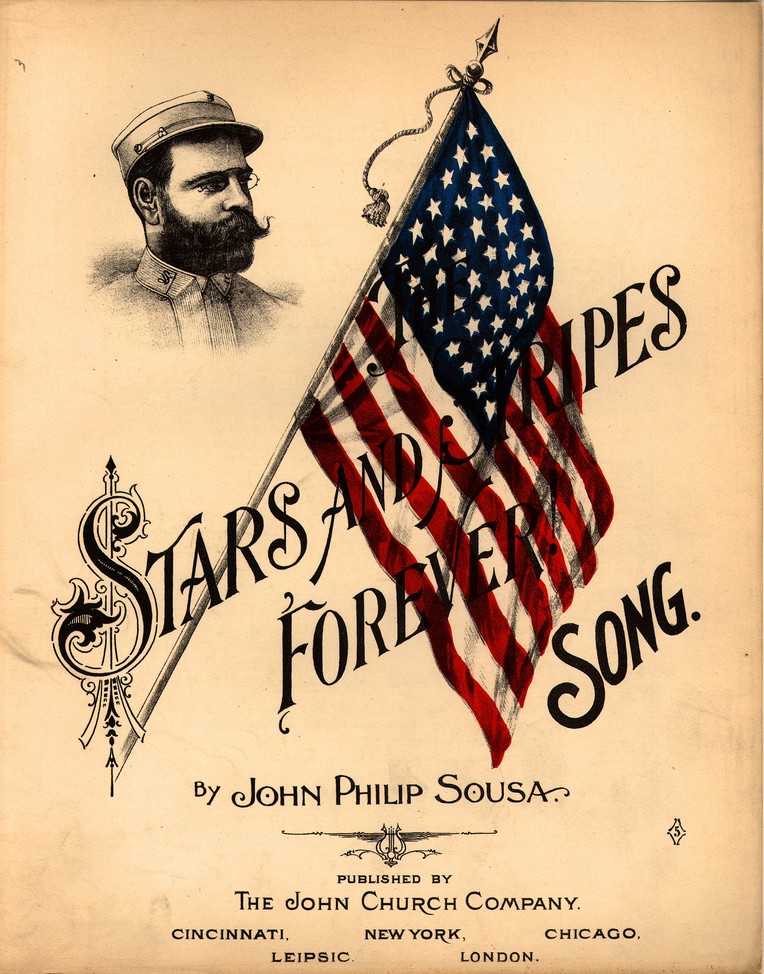
72dpi JPEG image of: Stars and stripes forever
Every year on the Fourth of July, Americans celebrate their country’s independence by singing timeless tunes written long ago. While some may know the motivation behind the songs, many do not know their history. Today, we’ll take three songs about the US of A and uncover how they came to be.

 “1812 Overture” by Pyotr Ilyich Tchaikovsky is a song that the RPO plays every year on the Fourth. Tchaikovsky was commissioned to write a piece for the grand opening of a cathedral in Moscow which was built to celebrate Russia’s defense against Napoleon’s invading force in 1812. Tchaikovsky ended up finishing the piece only six weeks after he began writing it, in 1880, and actually ended up hating it. He later complained that he felt the piece lacked warmth and love and was simply very loud and noisy. The piece only recently became Independence Day repertory after Arthur Fielder, long time conductor of the Boston Pops Orchestra, decided to include the piece in their Fourth of July performance in 1974.

“Stars and Stripes Forever” by John Philip Sousa was dubbed the National March of the United States of America by a 1987 act of the U.S. Congress. According to his autobiography, Marching Along, Sousa composed the march on Christmas Day, 1896. He was on an ocean liner on his way home from a vacation with his wife in Europe. He had just received word of the unexpected death of his good friend and band manager, David Blakely. Sousa was pacing the deck to gather his thoughts when the music came to him. He composed the march in his head and committed the notes to paper once he arrived back home in the United States. Sousa had also written his own lyrics to the piece, although it is more often played as the instrumental rendition. The march was an immediate success, and Sousa’s band played it at almost every concert until his death 35 years later.

Reverend Samuel Francis Smith wrote the words to “My Country ‘Tis of Thee” (also known as “America”), but the origin of the song's melody remains a mystery. Many Americans and Brits alike know that the song shares a melody with the national anthem of Great Britain, “God Save The Queen”. The family of Henry Carey, a British singer-composer, claimed that he was the first to compose both the lyrics and the music as “God Save Great George the King” in 1740. Historians, however, claim that the tune was previously sourced from English composer John Bull, the French court composer Jean-Baptiste Lully, and even a military hymn from Switzerland. Regardless of its mysterious origin, the tune was officially published in 1744 in England in a tune book called Thesaurus Musicus.

The lyrics evolved over time throughout the early 1800s, and the words that eventually became the tradition were written by Reverend Smith while he was studying at Andover Theological Seminary in 1831. As it is known today, the song, “My Country ‘Tis of Thee” was debuted by popular organist and composer Lowell Mason on July 4, 1831, at a children's service at the Park Street Church in Boston, Massachusetts.

Hopefully this look inside three popular Independence Day tunes has filled you with some insight into the spirit of the music. Cannons or no cannons, your Rochester Philharmonic Orchestra wishes you, your family, and your friends a safe and happy July 4th. Let freedom ring!

December 4, 2013

Why Donors Support the RPO

The RPO is “a cultural jewel that I want to help preserve,” says donor Deanne Molinari (pictured at left), a retired higher education administrator from Fairport. “The RPO is one of the best orchestras in the United States, and the most versatile as evidenced by the various concert series and the education work it does.”

Molinari is one of more than 30 donors who have joined the newly formed Artistic Excellence Society (AES), which recognizes annual campaign donors who make three-year pledges of $2,500 per year or more. “I was pleased to be able to join the Artistic Excellence Society because we are so fortunate in this community to have an orchestra to support,” she says. “Many communities have lost that option because they were unable or unwilling to support their orchestras when the need was greatest.”

“I’ve long been convinced that supporting our outstanding orchestra also provides support for so many other Rochester cultural organizations that are connected to the RPO,” says Rob W. Goodling, a Corn Hill resident, former Churchville-Chili choral director, and current music history instructor at the Hochstein School of Music and Dance.

Funding from AES members directly supports musicians' compensation, educational programming, artistic innovation, and concert and guest artist or guest conductor underwriting.

In addition to helping the RPO to attract and retain the best talent, serve the community, and grow in national recognition, other benefits of joining the AES include the opportunity to “adopt” a RPO musician, complimentary refreshments at Eastman Theatre concerts, a special donor brunch, and much more.

Jeff Crane, superintendent of schools for the West Irondequoit Central School District, says, “Sue and I enthusiastically joined the AES as a way in which we could demonstrate our gratitude for—and influence the sustainability of—the tradition of excellence that is the RPO!”

For more information about joining the AES, call Lauri Van Hise at 585-454-7311, x280 or e-mail her at lvanhise@rpo.org.

Orchestra photo by Janice Hanson.

November 6, 2013

Magical Nutcracker with Rochester City Ballet

This Thanksgiving, be transported by Tchaikovsky’s timeless score and the captivating dance and costumes of The Nutcracker. This year marks the 15th anniversary of this enchanting production by the RPO and Rochester City Ballet. Performances take place at 2 and 7 PM daily Friday, Nov. 29 through Sunday, Dec. 1 in Kodak Hall at Eastman Theatre.

The classic tale of Clara and her magical nutcracker is brought to life by talented dancers from the Rochester City Ballet, guest artists from America's top ballet companies, 175 community children, and the Bach Children’s Chorus – with Tchaikovsky's wonderful music performed live by your RPO, conducted by Michael Butterman (The Louise and Henry Epstein Family Chair).

RCB Artistic Director Jamey Leverett has created new choreography for The Nutcracker’s signature Land of Snow scene. “The whole show is nostalgic and exciting, with the snow scene being one of the most magical moments in the entire production,” Leverett said. “We’ve updated this classic section to showcase the incredible technique of our dancers and make the scene that much more special.”

Children's tickets start at only $10! Click here for tickets online, or call the Eastman Theatre Box Office at 585-454-2100.

Get ready for The Nutcracker with story readings at Barnes & Noble, Pittsford (Nov. 8, 7 PM), Penfield Library (Nov. 9, 11 AM), Greece Library (Nov. 9, 11 AM), and Strong Museum of Play (Nov. 11, 11 AM and 1 PM). 

Fans are invited to answer Nutcracker trivia questions on Facebook throughout the month of November for a chance to win two tickets to the Sunday evening show. To follow performance preparations and see behind-the-scenes photos of costumes and rehearsals, visit the RCB Facebook page.